News
IDEA Study Has Breakthrough Impact on Pension Policy
10 June, 2026
Experts from the IDEA think tank at CERGE-EI provided expert input for a proposed reform of the third pension pillar. The case represents an exceptional example of how data-driven economic research can contribute to effective public policymaking.
IDEA researchers Lukáš Nádvorník and Filip Pertold published the study Pension Fund Clients Trapped by Low Returns and High Fees, in which they analyze the long-standing weaknesses of the Czech voluntary pension savings system. The study highlights several problematic features of the current setup, in particular low fund returns, poorly designed investment strategies, and a high fee burden.
The study shows that the combination of low returns, overly conservative investment strategies, and high fees significantly reduces the amount of savings people accumulate over the long term as a supplement to the state pension. One consequence is that capital savings often do not serve as a regular monthly supplement to retirement income; instead, retirees tend to withdraw their accumulated funds in a single lump sum. The authors therefore set out recommendations aimed at making the system more effective, including changes to fees, state support, and investment strategies over the saver’s life cycle.
The Reform Under Preparation
The importance of the study is now becoming clear in connection with the planned reform of pension savings. The Ministry of Finance has presented a proposal for changes in precisely the areas highlighted by the IDEA study: fee levels, investment strategy design, and incentives for participants to save for longer in a more effective form.
According to available information, the proposal envisages capping fees for most pension funds at 0.5 percent per year and abolishing the performance fee, meaning the fee charged on returns achieved. For dynamic funds, where total annual costs can currently be around two percent in a typical year, this would represent a substantial reduction in costs for savers, often to less than a quarter of the current level. IDEA’s model calculations show that the current fee structure can deprive savers of a significant share of their future wealth, often amounting to tens of percent, while capping these fees should substantially reduce such losses.
The proposal also envisages introducing a modern, empirically verified life-cycle investment strategy as the default setting for new participants. Younger savers would be automatically directed toward more dynamic investments with a higher share of equities. As they approach retirement age, their savings would gradually and automatically shift into more conservative assets. The reform is also intended to strengthen state support for young participants: for people under 30, the state contribution would increase from 20 percent to 40 percent of their own contribution. The aim is to support long-term investment at a stage when compound returns can have the greatest impact on final savings. Young participants would also newly be allowed to withdraw one third of their savings by the age of 36.
The proposed changes are not intended to apply only to new clients, but also to people who are already saving in the pension system. There are approximately 3.9 million participants in the Czech third pillar, meaning that changes to fees and investment strategies could affect the savings conditions of a very broad segment of the population and most of the workforce. The proposal also concerns transformed funds, which, according to available information, are expected to end on December 31, 2036. The remaining participants would then be transferred to conservative funds under supplementary pension savings, or possibly to a life-cycle strategy.
The proposed fee reduction could significantly improve the cost structure of Czech pension savings in international comparison and move the system among Europe’s best. Thanks to its low-cost nature and passive index strategies, the new pension insurance product would be competitive with other alternatives on the investment market and would rank among the most advantageous ways of preparing financially for old age. At the same time, the system should ensure that fees are transparent for participants and easy to compare with other long-term savings and investment options. Transparency and comparability are essential conditions for a well-functioning retirement savings system.
From Empirical Analysis to Systemic Change
The study was produced as an independent research output by IDEA at CERGE-EI. It systematically described the weaknesses of the third pension pillar and proposed ways to make the system more effective. Immediately after publication, it became an important reference point in both expert and public debate on pension savings reform. In many key respects, the changes now under preparation correspond to the problems and recommendations formulated in the IDEA study, particularly in the areas of fees, state support, and life-cycle investment strategies.
This sequence — from independent academic analysis, through public debate, to the incorporation of its findings into concrete proposals for systemic change — makes the study one of the most striking examples of IDEA’s research impact on public policymaking. It shows that academic research can influence public decision-making not only in response to an already formulated political demand, but also by identifying a systemic problem in advance, supporting it with data, and contributing evidence-based recommendations to further debate.

“For me, the major success lies in a fundamental systemic shift in how the problem is perceived. The debate has moved away from the idea that the fault lies with participants and their insufficient contributions, and toward the real issue: a long-term dysfunctional product that needs to be fixed. This change in approach is crucial, and we can see it in the concrete political response. The focus is no longer on motivating people to contribute more, but on radically modernizing pension savings in line with the best models Europe has to offer,” says Lukáš Nádvorník, co-author of the IDEA study.
“What is crucial is that pension savings combine low fees with an investment strategy suited to the participant’s age. In long-term saving, even seemingly small differences in costs matter because they affect returns over decades. A life-cycle strategy also helps ensure that younger participants do not save too conservatively, while the riskiness of their portfolio gradually decreases as they approach retirement age,” adds Filip Pertold, co-author of the IDEA study.
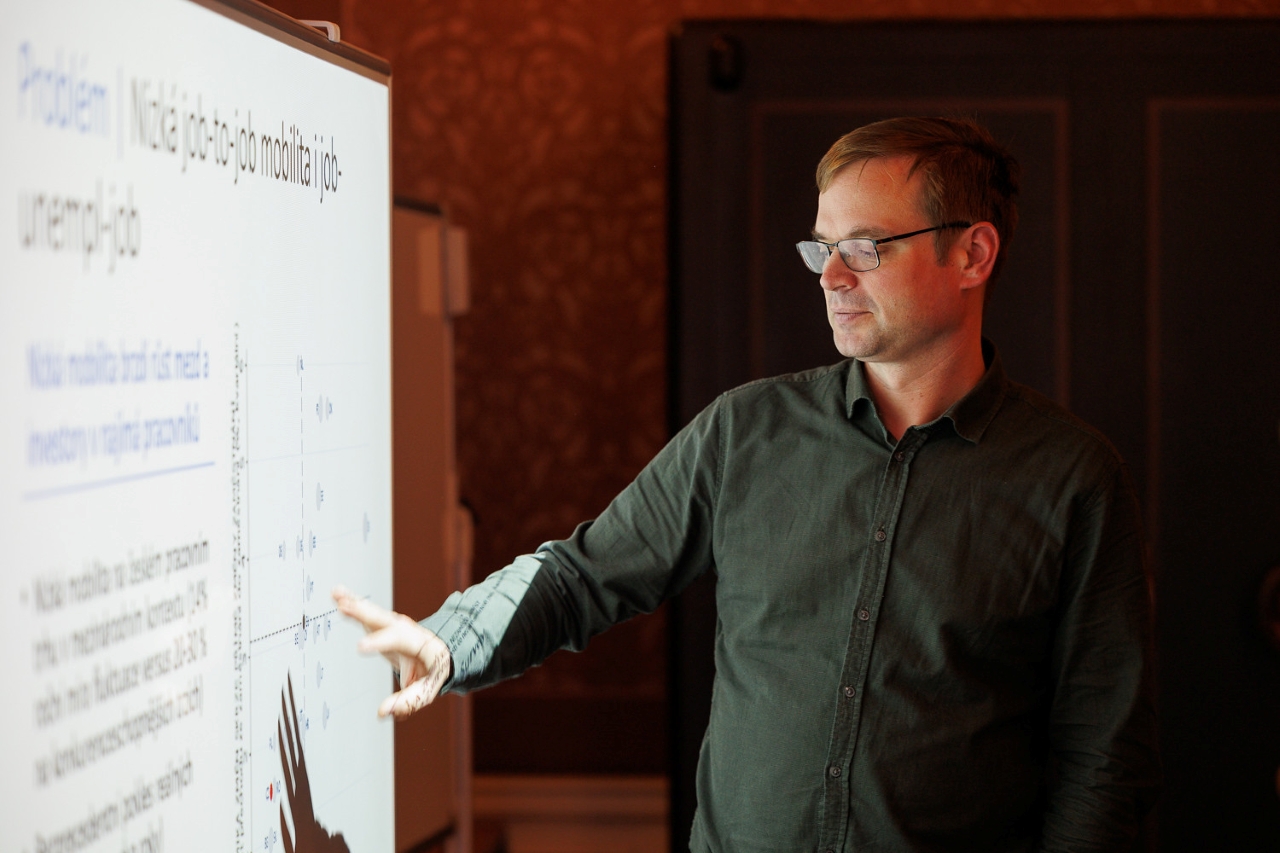
The proposed changes have the potential to affect the savings conditions of millions of third-pillar participants, as well as the way the state supports long-term financial security in retirement. The IDEA study thus enters an area where households’ individual financial decisions are closely linked to public spending design and the long-term sustainability of the pension system.
“This study proves that top-level applied economic research makes it possible to effectively identify structural problems in the pension system, quantify their consequences, and offer solutions based on data and economic analysis rather than impressions. That is one of the main missions of IDEA at CERGE-EI,” said CERGE-EI Director Marek Kapička, PhD.
The IDEA think tank is part of CERGE-EI and has long focused on applied economic research relevant to public policy. Its studies provide empirically grounded analyses and recommendations on issues important for economic policy, public finance, education, the labor market, and the social system. The study on pension savings demonstrates that independent academic research can serve not only as a source of expert knowledge, but also as a practical impulse for institutional change.